2026-07-10 • 10 min
Sore muscles after exercise: does massage really help?
DOMS explained: where soreness comes from, how long it lasts, what massage actually changes and how to recover better after training.
No, it’s not lactic acid — and no, suffering doesn’t mean progress.
That pain that shows up the next day
A big surf session, a trail run up La Rhune, your first gym session in months… and the next day (or the day after), every staircase becomes a challenge. This delayed pain has a name: DOMS (Delayed Onset Muscle Soreness). It’s normal, it’s temporary — and there’s a lot you can do to get through it better.
DOMS: what are we talking about?
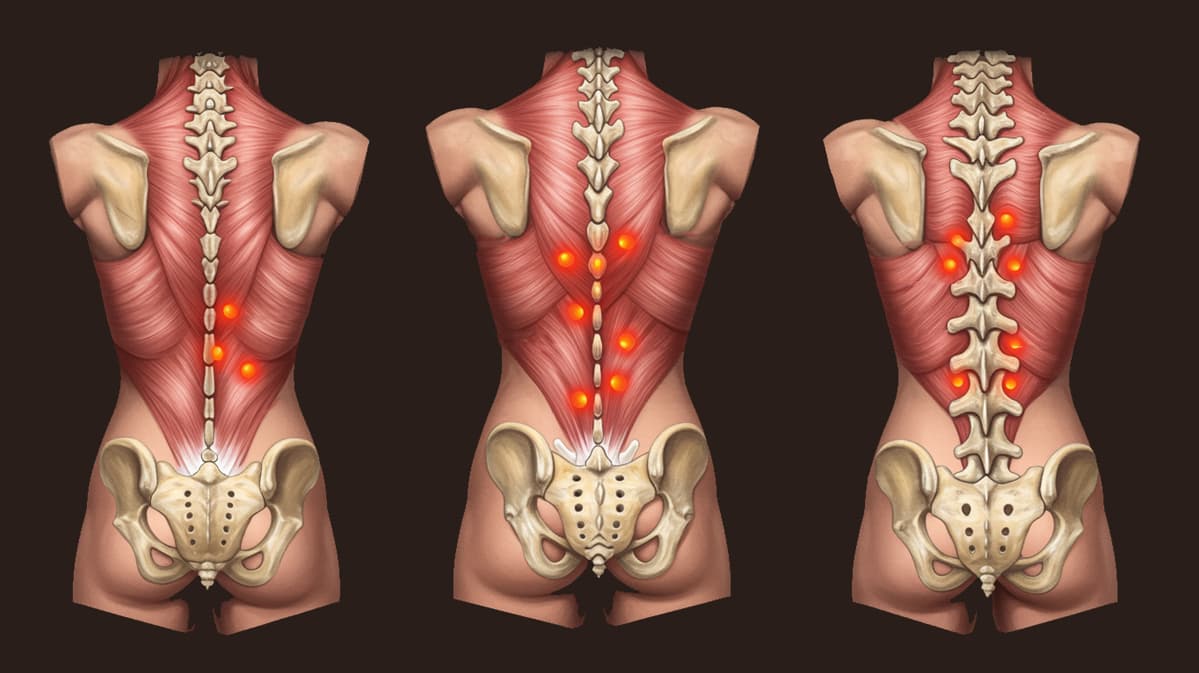
DOMS is a diffuse muscle soreness that appears with a delay after unusual or intense effort. It’s easy to recognise:
- Dull, diffuse ache, sensitive to pressure and movement.
- Stiffness and a temporary loss of strength in the muscles involved.
- Delayed onset: 12 to 24 hours after exercise, not during.
- Peak between 24 and 72 hours, then gradual fade.
- Mostly after new or intense efforts, especially braking work (downhills, landings, eccentric loading).
Where does it actually come from?
Micro-damage, not an injury
Unusual effort — especially braking actions (downhill running, landings, eccentric phases) — creates microscopic damage in muscle fibres and connective tissue. It’s reversible and nothing like a tear.
Repair-driven inflammation
Your body triggers an inflammatory response to repair and reinforce the muscle. That phase is what hurts — and it’s also what makes you more resistant next time (the “repeated bout effect”).
Not lactic acid
Lactate produced during exercise clears within about an hour. It cannot explain pain that shows up the next day. The myth is stubborn, but the science settled this long ago.
A sensitised nervous system
During repair, nerve endings in the muscle become more sensitive. That’s why normal pressure suddenly feels “good-hurt” — and why touch plays a real role in relief.
The typical timeline
0 – 12 h
Nothing, or just heavy legs. The calm before the stiffness.
12 – 24 h
Stiffness sets in; the first movements of the morning set the tone.
24 – 72 h
The peak. Walking downstairs after a trail race, lifting your arms after surfing: this is when it bites.
3 – 7 days
Gradual fade. The muscle comes out adapted and more resistant to the same effort.
Does massage really help? What the research says
Short answer: yes — the effect is moderate but real, and massage is actually one of the best-studied recovery methods. Meta-analyses comparing massage, compression garments, cold-water immersion and active recovery consistently rank massage first for reducing perceived soreness and fatigue.
- Measurable reduction in soreness, especially when massage happens within 24–48 hours of exercise.
- Lower perceived fatigue and a better sense of flexibility.
- Likely mechanisms: improved local circulation, reduced muscle tone, and above all a calming effect on a sensitised nervous system.
- Honest caveat: massage doesn’t make fibres repair faster. It changes how you experience recovery — less pain, more mobility, better sleep. Which is already a lot.
How to recover well
The right timing
The sweet spot is 24 to 48 hours after exercise, around the peak. Right after a very hard session, go for light, flowing work rather than deep pressure.
The right pressure
On sore muscles, pressure should stay in the comfortable “good-hurt” range. Crushing a muscle that’s mid-repair is counterproductive: we’re after release, not a battle.
Sleep, hydration, protein
The trio that actually rebuilds you. Massage complements these fundamentals — it doesn’t replace them. A full night’s sleep does more for your muscles than any recovery gadget.
Active recovery
Walking, easy cycling, gentle swimming: moving lightly gets blood flowing without re-damaging fibres, and often feels better than complete rest.
- Avoid very deep massage in the hours right after a maximal effort: the muscle needs calm first.
- Sharp, precise pain that appeared suddenly during exercise? Possible injury: no firm massage on it — get it checked first.
- Build back gradually: thanks to the repeated bout effect, the same effort done regularly produces less and less soreness.
Four myths to leave in the locker room
“It’s lactic acid”
No: lactate clears within about an hour after exercise. DOMS comes from micro-damage and repair-driven inflammation, not from a “waste product” sitting in the muscle.
“More pain means more gains”
Soreness is not a progress indicator. You can progress without DOMS — and wreck your legs without gaining anything. Progress shows over time, not in next-day pain.
“You need to stretch hard”
Aggressively stretching a micro-damaged muscle can make things worse. Gentle, short stretches for comfort, yes; forcing to “flush out” soreness, no.
“Massage erases DOMS”
It clearly reduces perceived pain and helps you move better, but fibre repair follows its own schedule. Massage supports recovery; it doesn’t short-circuit it.
FAQ
Massage before or after sport?
Both exist, with different goals: before, light and energising work; after (ideally 24–48 h), recovery work. For soreness, after is where it happens.
Which massage for sore muscles?
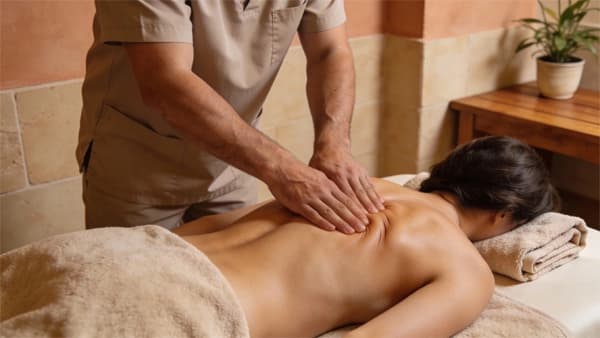
A recovery massage with moderate pressure, focused on the areas you worked. Very firm deep tissue can wait until the 24–72 h peak has passed.
Can I train with DOMS?
Yes, if the pain stays moderate: light activity even helps recovery. Just avoid maxing out the same muscle group during the peak.
Heat or cold?
Cold can help right after a very intense effort; heat feels great afterwards to relax. Both relieve in the moment; neither dramatically speeds up repair.
It comes back after every surf session — normal?
Usually a sign your sessions are too far apart: the muscle “forgets” in between. Consistency, sleep, and recovery massage on the classic paddling zones — shoulders, neck, lower back — change everything.
Further reading
Big session, big workout?
Send me your town + your sport + a time slot. I come with the table, oils and towels, and we match the pressure to your recovery — from Bayonne to Donostia.
Book your massage
Send your area + your goal + 2 time slots, I’ll reply quickly.
Contact me →