2026-07-14 • 11 min
Tension headaches: the role of the traps and the jaw
Tension headache or migraine? Understand how the traps, suboccipitals and jaw feed headaches, the red flags to know, and what actually helps.
Many “migraines” are actually born… in the neck and the jaw.
When your head pays for your neck
What people often call a “tension migraine” is usually a tension-type headache — the most common headache in the world. Long screen days, rising stress, a jaw clenched without noticing: the muscles of the neck, shoulders and face can trigger and maintain that vice-like pain. The good news: when the origin is muscular, there are real levers to pull.
Tension headache or migraine: the differences
Criteria
Type of pain
Tension headache
Vice-like pressure, a “band” on both sides of the head
Migraine
Throbbing, pulsating, often one-sided
Criteria
Intensity
Tension headache
Mild to moderate: you can get on with your day
Migraine
Moderate to severe: activity becomes difficult
Criteria
Associated signs
Tension headache
Few: sometimes neck and shoulders tender to pressure
Migraine
Nausea, light and sound sensitivity, sometimes aura
Criteria
Effect of movement
Tension headache
Moving or walking often relieves it
Migraine
Movement makes the pain worse
Criteria
Typical triggers
Tension headache
Stress, long screen time, posture, jaw clenching, poor sleep
Migraine
Hormones, disrupted sleep, certain foods, stress
The muscles that project pain into the skull
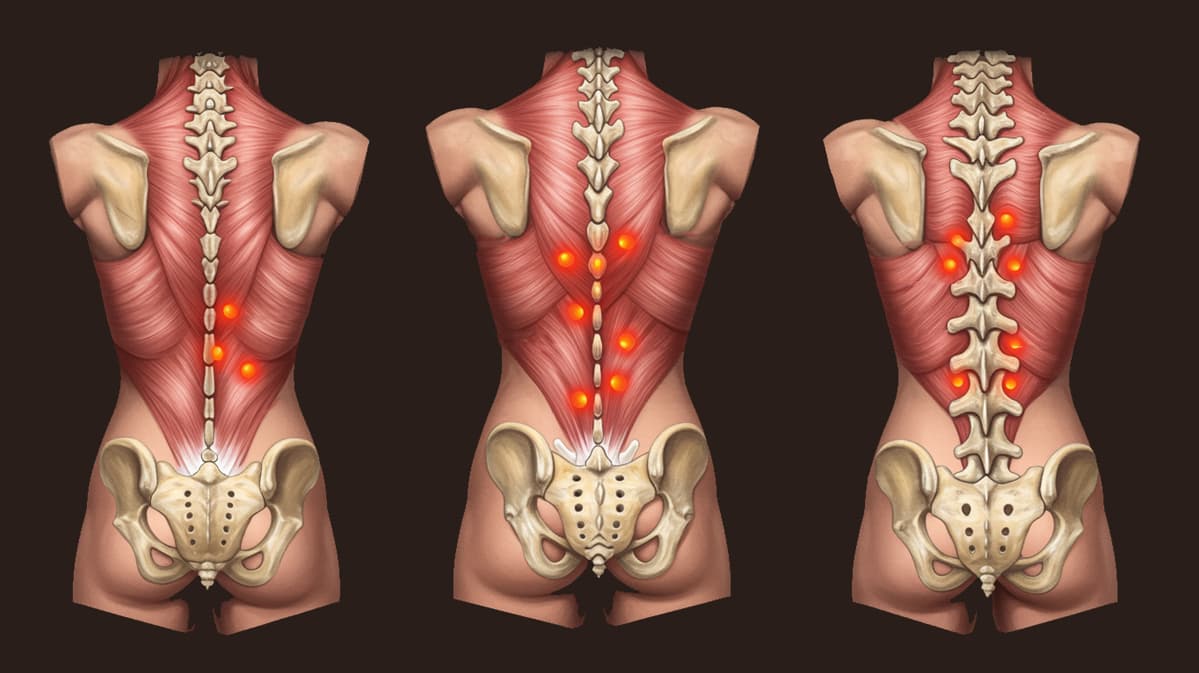
Some neck and shoulder muscles develop trigger points that project pain at a distance — to the temple, the forehead, behind the eye. That’s referred pain: the head hurts, but the source sits lower down.
Upper trapezius
The shoulders that creep up towards your ears the moment stress arrives. Their trigger points classically refer to the temple and behind the eye — the great classic of the end-of-day “migraine”.
Suboccipitals
These small muscles at the base of the skull work non-stop when your head tilts towards a screen or phone. Overworked, they produce that headband-like pain and pressure behind the eyes.
SCM (sternocleidomastoid)
The large muscle at the front of the neck. Its tension can refer to the forehead and brow, and produce surprising sensations: pseudo-dizziness, ear pressure.
Levator scapulae
At the angle between neck and shoulder — the one that locks up when turning your head becomes difficult. Often involved in headaches that start from the neck.
The jaw: the blind spot
The masseters and temporalis are among the strongest muscles in the body — and they sometimes work all night without you knowing. Clenching and bruxism project tension into the temples and skull, and many “unexplained” headaches run through here.
- Waking up with heavy temples or a stiff jaw? That’s a serious lead.
- The masseters (in the cheeks) and temporalis (on the temples) develop trigger points that perfectly mimic a headache.
- Daytime clenching: check yourself at your desk — if your teeth are touching, your jaw is working for nothing.
- Jaw, neck and posture form a trio: treating one without looking at the others rarely works.
Signs that require medical attention
- Sudden, explosive “thunderclap” headache — the worst of your life.
- Headache with fever, neck stiffness or confusion.
- Headache following a blow to the head, even a seemingly minor one.
- Visual disturbance, trouble speaking, weakness or numbness on one side of the body.
- New headaches after 50, or a usual headache that suddenly changes in character or frequency.
What you can do yourself
Screen breaks and posture
Every 45 minutes: stand up, look into the distance, bring your head back over your shoulders. Screen at eye level — every centimetre of forward head is paid for in suboccipital tension.
Heat on the neck
10 to 15 minutes of heat (hot water bottle, warm shower on the neck) relaxes the traps and the base of the skull — simple and surprisingly effective on a headache that’s just starting.
Gentle self-massage
Temples, masseters, base of the skull: slow circles, comfortable pressure, breathing as you go. Two minutes is often enough to take the pressure down a notch.
Unlock the jaw
Rest position: lips closed, teeth apart, tongue resting on the palate. Remind yourself several times a day — especially during moments of deep focus.
- Regular hydration and sleep: two major triggers, and the easiest to fix.
- Careful with repeated self-medication: painkillers taken too often end up maintaining headaches (rebound effect).
- Move regularly: physical activity is one of the best-proven factors for reducing tension headache frequency.
Massage: when it makes sense
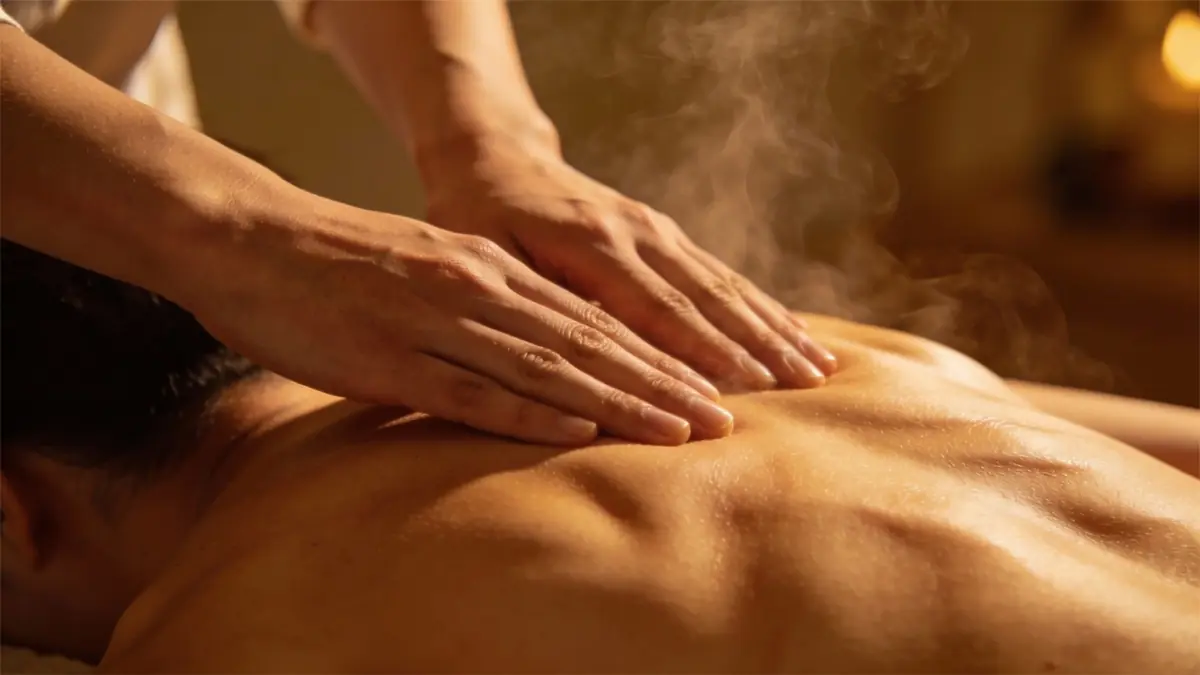
When headaches have a muscular component — and they very often do — precise work on the neck, shoulders, skull and jaw earns its place: releasing the traps and suboccipitals, defusing trigger points, and calming a nervous system stuck in overdrive.
- We almost never work “the head” alone: shoulders, neck and upper back carry the chain up to the skull.
- Slow, deep techniques on the traps; precise, sustained pressure on the trigger points that reproduce “your” pain.
- Jaw release is done gently, from the outside: masseters and temporalis respond remarkably well.
- At home, you stay relaxed after the session — and that’s no small detail: the calm that follows is part of the effect.
FAQ
Tension headache or migraine: how can I be sure?
Only a doctor can make the diagnosis. Clues: two-sided vice with your day carrying on → more likely tension; one-sided throbbing with nausea and craving darkness → more likely migraine. Keeping a small headache diary helps a lot.
Can massage trigger a headache?
After deep neck work, a mild transient headache can appear — hydrate and rest, it passes quickly. Mention it: we adapt the pressure next session.
How many sessions before I feel a difference?
Often some relief from the very first session. For tension built up over months, expect a few closely spaced sessions, then maintenance at whatever rhythm suits you.
What if I clench my teeth at night?
Talk to your dentist: a night guard protects the teeth and reduces the muscular load. Massage helps lower the overall tension of the masseters and temporalis — and stress management does the rest.
Does desk posture explain everything?
Rarely on its own. Stress, sleep, hydration, jaw and posture add up — it’s the total load that triggers. The goal isn’t perfect posture, it’s lowering the overall load.
Further reading
Head in a vice?
Write to me: your town + how long it’s been going on + 2 time slots. A neck-shoulders-jaw session at home, pressure adapted — from Bayonne to Donostia.
Book your massage
Send your area + your goal + 2 time slots, I’ll reply quickly.
Contact me →