2026-02-10 • 12 min
Sciatica vs piriformis syndrome: differences, signs, what to do
Understand true sciatica (nerve) vs pseudo-sciatica (often glute/piriformis): symptoms, red flags, safe self-check cues, and what helps.
Pain going down the leg isn’t always “sciatica”.
Why the difference matters
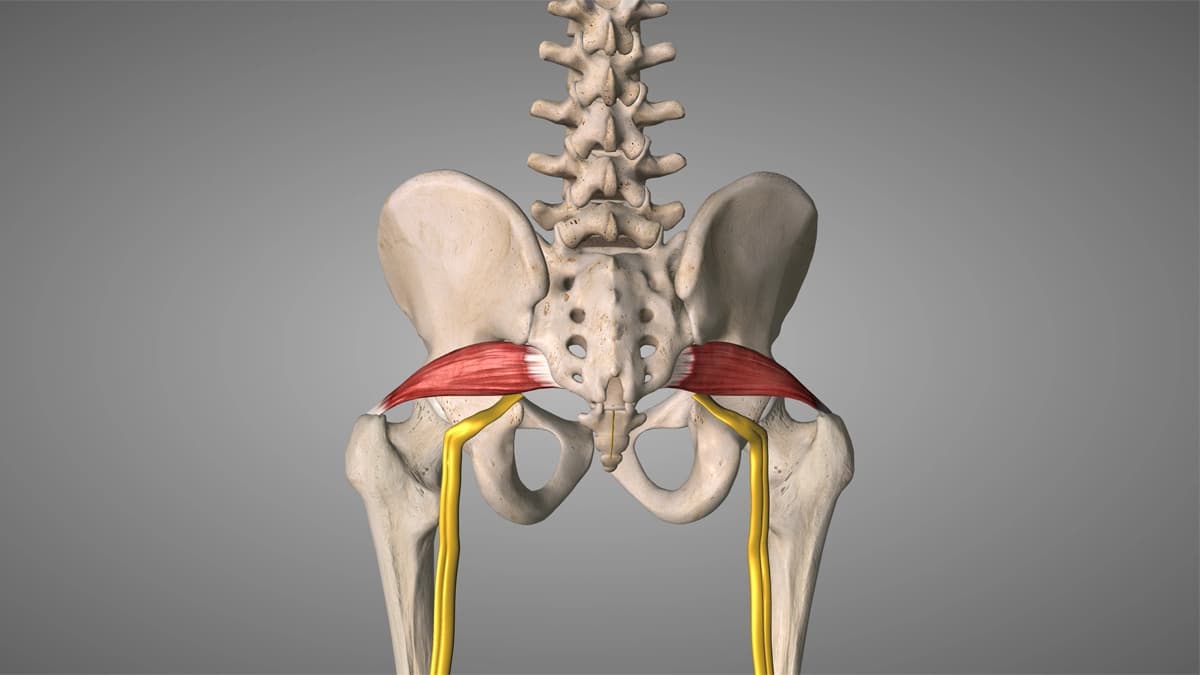
Many people call any buttock/low-back pain that travels down the leg “sciatica”. In reality, there are different causes. True sciatica involves nerve irritation/compression. Pseudo-sciatica can feel similar but often comes from glute/piriformis tension and trigger points. The right move: look for key signs and avoid aggressive self-treatment.
Quick definitions
Sciatica (nerve)
Pain linked to irritation/compression of a nerve root (often lumbar) or the sciatic nerve. It may feel electrical/burning, with tingling, numbness, and sometimes weakness.
Pseudo-sciatica (often piriformis/glute)
Sciatica-like pain that more often comes from glute muscles (piriformis, glute med), fascia and trigger points. It tends to feel more muscular and tender to touch.
Helpful cues: sciatica vs pseudo-sciatica
Criteria
Pain quality
Sciatica (nerve)
Often sharp/electrical/burning; can be very specific.
Pseudo (glute)
More deep ache/tight pull; “deep muscle” feeling.
Criteria
Neurological signs
Sciatica (nerve)
Tingling, numbness, weakness can appear.
Pseudo (glute)
True weakness is uncommon; more stiffness and pressure tenderness.
Criteria
Buttock pressure
Sciatica (nerve)
Not always reproduced by pressing a precise point.
Pseudo (glute)
Often reproducible on a specific tender spot (trigger point).
Criteria
Sitting
Sciatica (nerve)
Can worsen (varies with cause).
Pseudo (glute)
Often worsens with long sitting/compression on the glute.
Criteria
Path down the leg
Sciatica (nerve)
More “nerve-like”, sometimes down to the foot.
Pseudo (glute)
Often buttock → back of thigh, less commonly to toes.
Red flags: don’t ignore these
- Weakness (foot drop, trouble walking on heels/toes)
- Significant or progressing numbness
- Severe sudden pain or pain consistently waking you at night
- Bladder/bowel changes, saddle numbness (medical emergency)
- Fever, unexplained weight loss, major history + new pain
Safe self-check cues (no aggressive testing)
Without doing medical tests, you can observe a few indicators:
- Is it mainly deep buttock muscle pain, tender to touch?
- Any tingling/numbness or true weakness?
- Does long sitting clearly trigger it (glute compression)?
- Does gentle walking improve it a bit (often a good muscular sign)?
What helps (useful, progressive approach)
1) Calm irritation (48–72h if flare)
Reduce triggers (long sitting, heavy load, sudden movements). Prefer gentle walking and comfortable positions.
2) Gentle mobility (hips + low back)
Slow, non-sharp movements often help: hip mobility, gentle rotation, low-back comfort, lower breathing.
3) Offload the glute (if pseudo)
Moderate self-pressure (ball) on 1–2 points, 60–90s, breathable. Then walk/move gently.
4) Gradual strengthening
As pain decreases: glute/core strengthening (bridges, light abduction) with clean form.
- Max pain 6–7/10, keep breathing.
- Avoid aggressive piriformis stretches if it flares symptoms.
- If neurological signs: be cautious and get assessed.
- Consistency (small often) beats one big session.
Massage: when it’s relevant
If pain is mainly muscular (glute/piriformis) without concerning neurological signs, massage can help reduce tone, improve mobility and calm the nervous system.
- Often works best as a chain approach: glute + hips + low back.
- Slow, breathable pressure reduces guarding.
- Gains tend to hold better when you move gently afterwards.
Sciatica / piriformis FAQ
How do I know if it’s true sciatica?
Cues: electrical pain, tingling, numbness, weakness. Only a professional can confirm — if you have these, be cautious.
Is piriformis stretching always good?
Not always. If it irritates symptoms (especially nerve sensitivity), prefer gentle mobility and gradual strengthening.
Massage ball on the glute: yes or no?
Yes if muscular: moderate, slow, breathable, 1–2 points then walking. Avoid if neurological symptoms are significant.
How long does it last?
If mostly muscular, improvement can happen within days to weeks with consistency. If it worsens or persists, get assessed.
Buttock/leg pain: want a tension-focused check?
Send: your area (city) + your symptoms (path, intensity) + 2 time slots. I’ll reply quickly.
Book your massage
Send your area + your goal + 2 time slots, I’ll reply quickly.
Contact me →